30,000+
Products made searchable
A guided discovery experience helps engineers narrow one of North America's largest precision-component catalogs down to the single part their design requires.
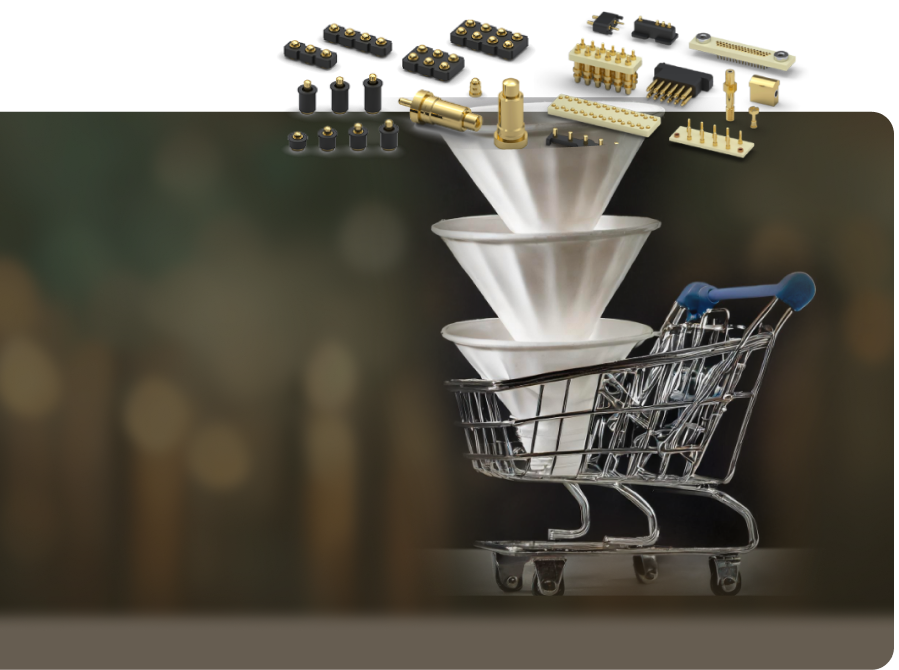
Technical Catalog Search & Product Discovery UX
Helping engineers find the exact right part in a massive technical catalog is a discovery problem, and solving it takes an agency that pairs search engineering with intuitive design. Millennium built a precision product finder for Mill-Max that helps engineers navigate more than 30,000 precision-machined interconnect components — combining a customized SOLR search platform with a UX designed specifically for how technical audiences actually search.
How Millennium made it happen:
30,000+
A guided discovery experience helps engineers narrow one of North America's largest precision-component catalogs down to the single part their design requires.
22
A customized SOLR search platform filters products across 22 distinct engineering and manufacturing data fields — from spring force and stroke height to footprint and pin count.
~250ms
Faceted search results return across the full 30,000+ product catalog in roughly a quarter-second, keeping pace with how quickly engineers work.
Building search for a large technical catalog requires pairing a purpose-built search engine with a user experience designed around how the audience actually thinks. Mill-Max manufactures one of the largest collections of precision-machined interconnect components in North America — more than 30,000 products, each with detailed specifications, diagrams, CAD models, and component data, with variations measured down to fractions of a millimeter. As the catalog grew over the years to serve an expanding product line, the discovery challenge grew with it: engineers needed a faster, more precise way to move from thousands of possibilities to the single qualified part their design required. Millennium was built for exactly this kind of problem.
A standard CMS search couldn't handle the structure of Mill-Max's data — and that's a data architecture problem, not a content problem. Mill-Max parts aren't described by a title and a paragraph; each component is defined by as many as 22 distinct engineering variables, including product family, footprint, diameter, spring force, stroke height, current capacity, and pin count. Filtering a catalog this large across that many interdependent technical fields — where the right answer depends on how multiple specifications interact — is precisely the kind of structured, multi-faceted query that a CMS's native search isn't designed to handle at speed. Millennium implemented Apache SOLR: a search platform engineered to index and filter highly structured data across many fields simultaneously, with the backend capacity for bulk product updates and pre-indexed queries that keep results fast even as the catalog scales. This is the kind of engineering Millennium does — SOLR implementation, structured-data search, and complex catalog architecture are core capabilities, not outsourced add-ons.
A great technical product finder is equal parts search engineering and user experience design. The Mill-Max solution included:
Designing search for engineers means designing for precision and confidence, not just speed. Millennium began by evaluating how engineers actually interacted with the existing catalog, identifying where friction slowed them down in moving from a broad need to a specific part. The resulting experience replaced open-ended keyword searching with guided, specification-driven filtering — letting engineers refine results by the exact technical criteria their application demands. The elegance is in the pairing: SOLR delivers the speed and precision under the hood, while an intuitive interface makes navigating a massive, deeply technical dataset feel effortless. That combination — serious search engineering wrapped in genuinely usable design — is what turns a sprawling catalog into a tool engineers actually want to use.
The guided filtering experience lets engineers narrow more than 30,000 products by up to 22 technical variables — pairing SOLR search precision with an interface designed for how engineers actually work.
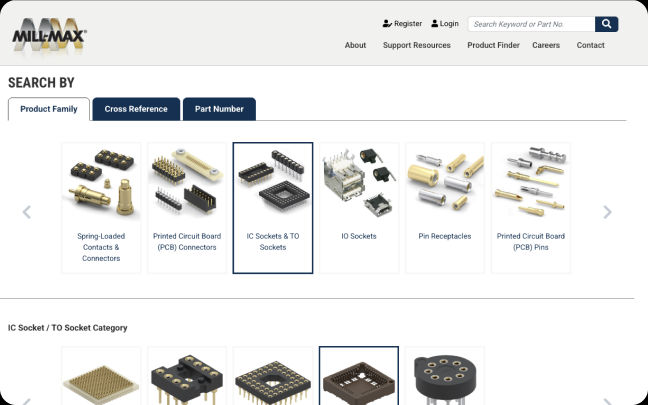
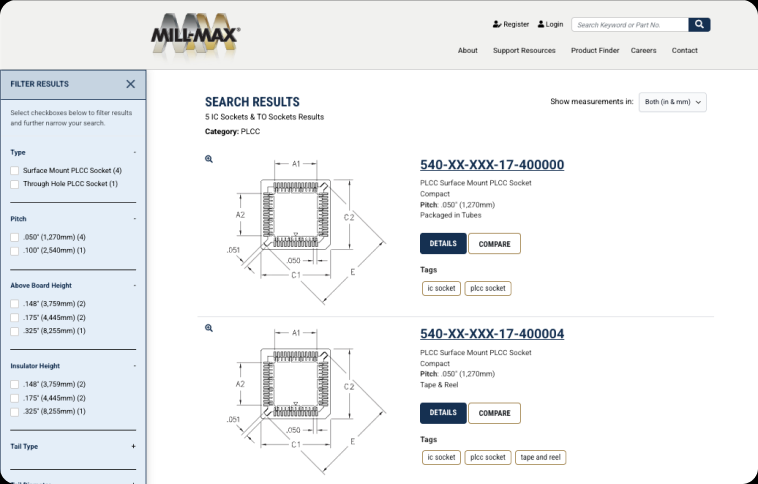
The product finder transformed the Mill-Max website from a catalog into a working engineering tool. Engineers can now move from a starting point of 30,000+ products down to the single part their design requires — filtering across 22 technical variables with results returning in roughly a quarter-second. The experience improves product discovery, strengthens engagement with a highly technical audience, and reinforces Mill-Max's position as a leader in precision interconnect components. And because Millennium continues to serve as the platform's ongoing development partner, the system keeps evolving — with new features and functional enhancements shipped through regular development sprints rather than sitting still.
The right technology depends on your catalog's size, data complexity, and how customers search — and the honest answer is that most sites don't need a heavy solution at all. Roughly 90% of the sites Millennium builds are well served by integrated CMS search. But when a catalog is large or deeply structured, a dedicated search platform earns its place, and Millennium has hands-on production experience across major options including Apache SOLR and Amazon OpenSearch Service. For Mill-Max's 30,000+ technical components, the right tool was a customized SOLR platform filtering across 22 engineering variables. The job picks the technology, not the other way around.
A large catalog becomes navigable when powerful search is paired with an interface designed around how your customers actually look for products. The technology handles speed and precision behind the scenes, but the experience is won or lost in the UI: guided filtering, sensible defaults, and progressive narrowing that moves users from thousands of options to the right one without overwhelming them. Millennium designed the Mill-Max product finder so engineers refine by the exact specifications that matter to their application, turning a 30,000+ product catalog from a barrier into a useful tool.
Apache SOLR is the better choice when your data is highly structured and must be filtered across many fields at once. A standard CMS search is built for text content, but Mill-Max products are defined by up to 22 interdependent engineering variables, making this a structured-data problem that SOLR is purpose-built to solve. SOLR also enables bulk indexing and pre-processed queries that keep results fast as the catalog grows.
Faceted search lets engineers narrow a large catalog by specific product attributes instead of relying on broad keyword searches. For Mill-Max, that means filtering more than 30,000 components across 22 technical variables — including product family, footprint, diameter, spring force, stroke height, current capacity, and pin count — so users can move from a broad need to a qualified part with confidence.
Yes. The Mill-Max product finder includes downloadable 3D models and CAD files so engineers can fit parts virtually into their workflow before committing. The platform also supports sample ordering for prototype builds and purchase order creation, giving engineers a path from product discovery to procurement without leaving the site.
Millennium is a New York-based agency that builds custom search, product discovery, and complex catalog experiences for technical and B2B organizations. Millennium's capabilities include UX research, structured-data search engineering across platforms like SOLR and Amazon OpenSearch Service, Drupal development, and ongoing platform partnership — continuing to enhance the systems it builds through regular development sprints.
Technical catalog UX
If your product catalog is too complex for standard search, Millennium can help connect data architecture, SOLR engineering, UX design, and Drupal development into a product discovery experience engineers can trust.
A scalable digital foundation supported a complex portfolio of food brands across markets, languages, and content needs.
A public-sector brand and Drupal platform made economic impact, documents, and community benefit easier to understand.